Thermoformed trays for industrial, electronics, and automotive applications
Custom thermoformed trays for component handling, automated manufacturing, and protective packaging solutions
Custom thermoformed trays
Thermoformed trays are plastic packaging and handling solutions manufactured by forming heated plastic sheet over custom tooling. Cavities and other features are engineered around product dimensions to provide precise positioning, retention, separation, and protection.
Tray design considerations include material selection, formed wall thickness, dimensional tolerances, assembly functionality, and stacking or nesting requirements. These factors influence tray performance, durability, and compatibility with downstream handling processes.
Dordan designs and manufactures custom thermoformed trays for medical, industrial, automotive, and electronics applications. With in-house packaging design, tooling, and thermoforming capabilities, our team works closely with customers to develop trays that meet application-specific requirements, from initial design and prototyping through production.
Thermoformed tray categories
From work-in-process handling to ESD protection and automotive manufacturing, Dordan designs custom thermoformed trays around the specific requirements of your components, production processes, and supply chain.
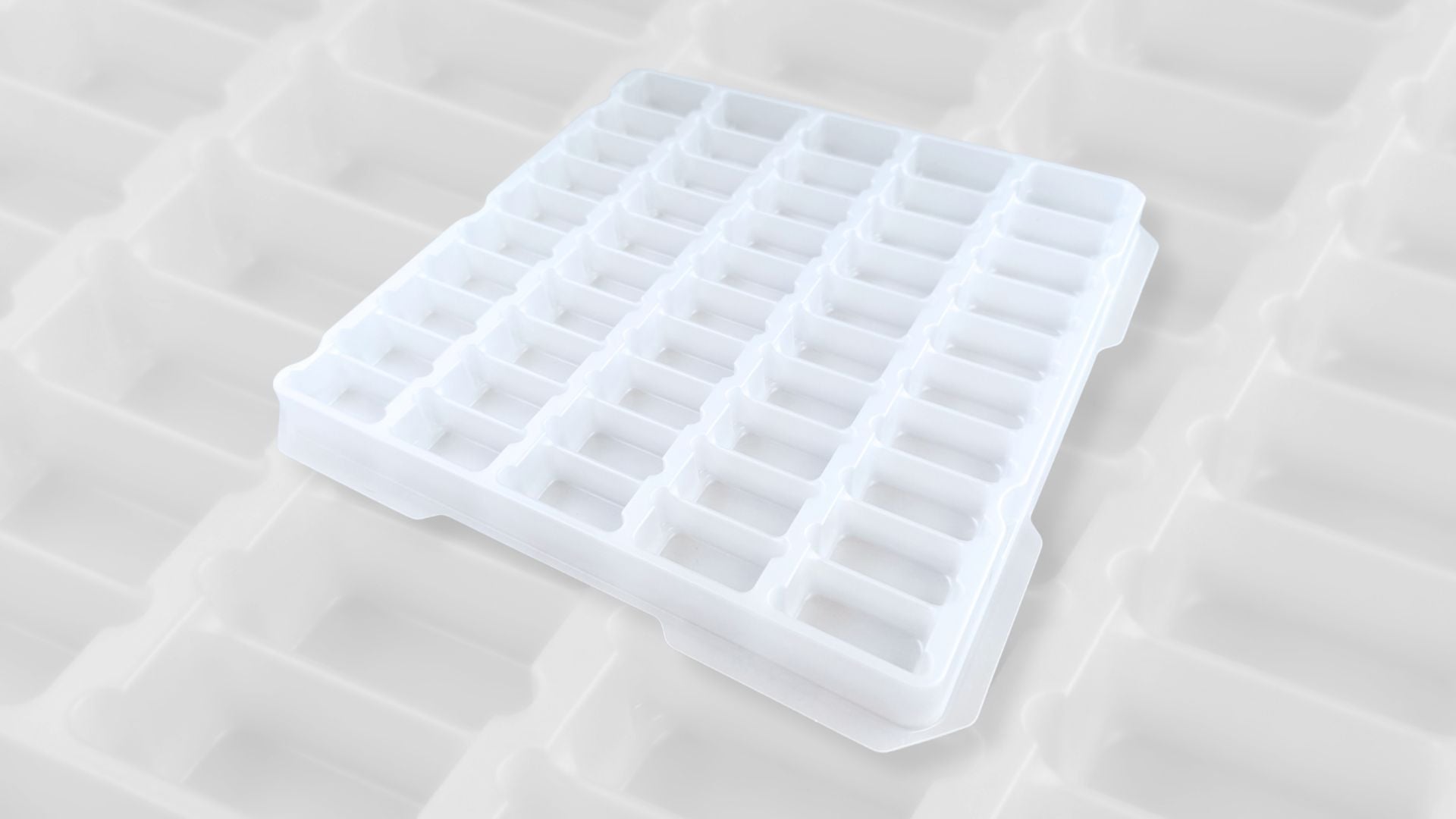
Dunnage & Assembly Trays
Organize, separate, and protect components throughout manufacturing, assembly, and shipping. Custom-designed cavities support secure part positioning, efficient handling, and repeatable workflows.
ESD & Conductive Trays
Protect static-sensitive electronics with trays manufactured from ESD-protective and conductive materials. Material selection and tray design support component protection throughout production, storage, and transport.
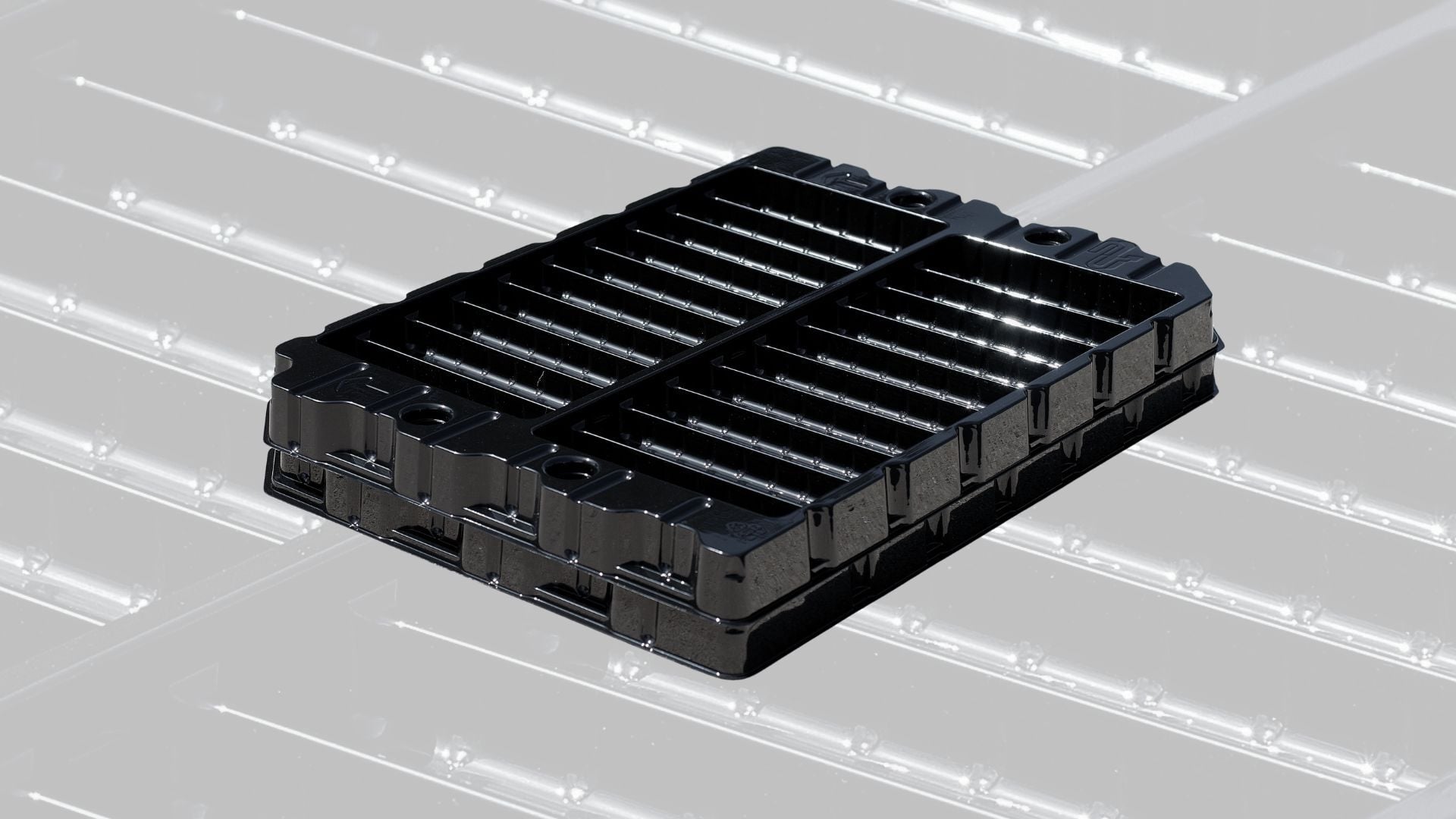
Automotive Component Trays
Support automotive production with precision-formed trays for component handling, transfer, and automated assembly. Engineered for consistent part positioning and dimensional requirements, with PPAP documentation available.
Application-specific material options
Dordan offers a range of thermoformable plastics selected for product protection, handling, chemical resistance, temperature requirements, and static control.
Common materials include:
- RPET/APET: Recycled or virgin PET offering clarity and chemical resistance for assembly, shipping, and retail trays.
- RHIPS/HIPS: Recycled or virgin high-impact polystyrene for industrial packaging and dunnage. Available in multiple colors.
- PP: Durable, chemical- and temperature-resistant material for reusable and heavy-duty trays.
- PETG: Clear, easily thermoformed material compatible with heat sealing and common sterilization methods.
- HDPE: Tough, chemical-resistant material for reusable industrial trays.
- ABS: Rigid, impact-resistant material with good dimensional stability.
- PVC: Clear or colored material offering stiffness and protection.
Specialty material options:
- Flame-Retardant (UL 94): Available in select materials for applications with flammability requirements.
- Anti-Static: Reduces static charge generation and accumulation; not a substitute for ESD protection.
- Static Dissipative (ESD Safe): Helps protect sensitive electronics. Surface resistance: 1×10⁴ to below 1×10¹¹ ohms.
- Conductive: Provides a low-resistance path for electrical charge. Surface resistance below 1×10⁴ ohms.
Custom thermoformed tray development
Dordan's tray development process includes application review, engineering, prototyping, customer approval, and production tooling. Each stage evaluates the requirements necessary to support repeatable manufacturing.
- Application Review: Define product specifications, handling requirements, material selection, and critical dimensions
- Design & Engineering: Develop tray designs and engineering drawings for customer review
- Prototyping & Evaluation: Produce samples to evaluate fit, function, and manufacturability
- Customer Approval: Review samples and finalize specifications before production tooling
- Production Tooling: Manufacture tooling based on the approved design
- Thermoforming & Quality Control: Begin manufacturing with inspection and validation requirements established for the application
Thermoformed tray design, tooling, and manufacturing
From thermoformed tray design through production
Custom thermoformed trays are developed and manufactured in-house, with integrated engineering, prototype and production tooling, thermoforming, and quality control.
Dordan thermoforms trays up to 30" x 36" with forming depths up to 5.5", from 0.010" to 0.125" sheet thickness, across 14 in-house thermoforming lines, including dedicated ISO Class 8 cleanroom thermoforming. Maximum size, depth, and thickness vary by material and tray design.
Tray Design & Engineering
Custom thermoformed trays are designed in Siemens NX around product dimensions, tray function, handling requirements, and the thermoforming process. Engineering considers cavity layout, product retention and orientation, nesting and stacking, material distribution, and manufacturability before tooling is developed.
Prototyping & Production Tooling
Prototype and production tooling is CNC-machined in-house from aluminum using NX CAM. Prototype tooling supports sample development and design evaluation before production tooling is finalized, allowing tray fit, function, handling, and manufacturability to be evaluated early in development.
Thermoformed Tray Manufacturing
Dordan manufactures custom thermoformed trays in-house across 14 thermoforming lines. Production capabilities support a range of materials, part sizes, and volumes, with robotic automation and dedicated cleanroom thermoforming available for application-specific requirements.
Quality Control & Validation
Dordan's ISO 9001:2015 and ISO 13485:2016-certified quality systems support dimensional inspection and verification of critical tray tolerances. First article inspection, process capability (Cpk) studies, IQ/OQ/PQ validation, and PPAP documentation are available based on customer requirements.
Common questions about custom thermoformed trays
Do your trays work with robotic or automated assembly systems?
Yes. Many of Dordan's dunnage and assembly trays are engineered for compatibility with robotic pick-and-place systems, vision-guided assembly, and automated handling equipment. Design factors such as part orientation, cavity tolerances, pick points, and tray indexing are reviewed during engineering to support automation requirements provided by the customer or their equipment integrator.
Can trays be designed to stack or nest to reduce shipping volume?
Yes. Trays can be engineered to stack or nest based on the part dimensions, tray design, and shipping or storage requirements of the program. Nesting reduces empty-tray shipping volume and storage footprint, while stacking features support safe, secure handling of loaded trays during transport.
What tray requirements are typical for automotive component packaging?
Automotive component trays are often engineered to withstand repeated handling, line-side use, and exposure to heat, oils, or other manufacturing environment conditions. Design considerations typically include part retention, durability through multiple handling cycles, compatibility with conveyor or automated line systems, and material selection suited for the manufacturing environment.
What ESD or conductive requirements can you support for electronics handling trays?
Dordan manufactures trays using anti-static, ESD-safe, and conductive materials to protect sensitive electronic components during handling, assembly, and transport. Material selection is based on the surface resistance requirements of the application, along with compatibility with automated handling, grounding systems, and cleanroom or production environment conditions.
Let's scope your thermoformed tray project
Share your product dimensions, application, and production requirements. Our team will review your project and follow up the same business day, even if specifications aren't finalized.